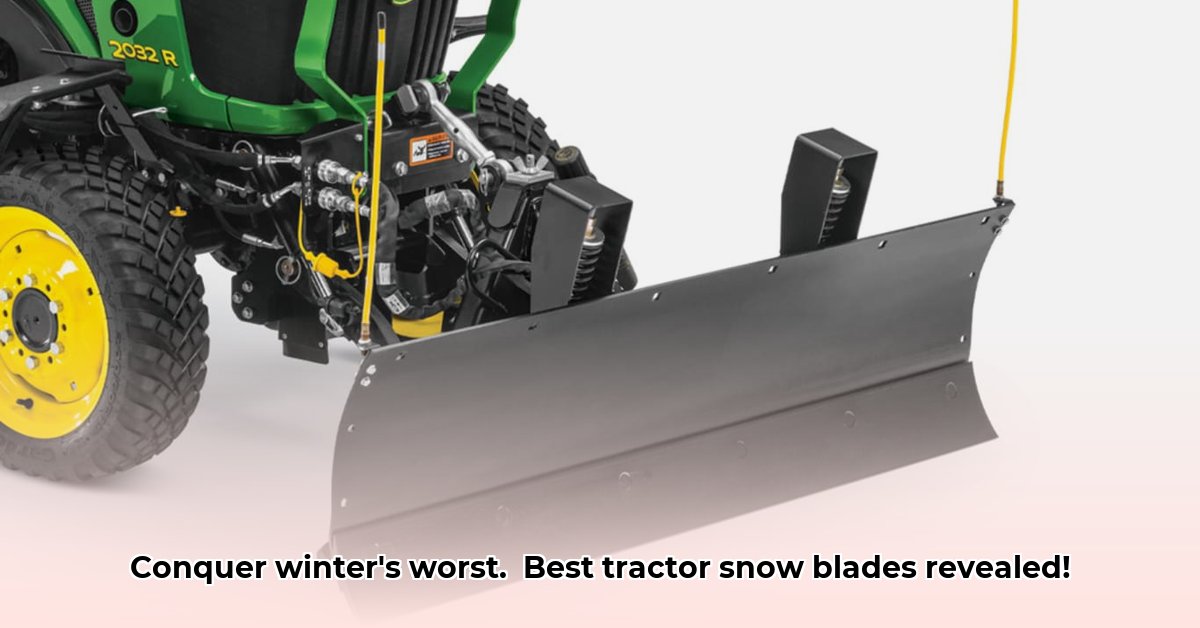
Winter's coming, and with it, the potential for significant snowfall. If you own a tractor, you possess the power to conquer even the heaviest snowfalls, but choosing the right snow removal blade is crucial for efficiency and safety. This comprehensive guide helps you select, attach, operate, and maintain the perfect snow-clearing blade for your specific needs, whether you're a homeowner, commercial property manager, or farmer. For even more detailed information, check out this helpful guide.
Choosing the Right Snow Removal Blade
Selecting the ideal snow removal blade depends on several critical factors: your budget, typical snowfall amounts, and the size of the area you need to clear. Let's examine the key choices:
Blade Type: Straight vs. V-Plow
The blade's shape significantly impacts its performance. Straight blades are versatile and effective for lighter snowfalls or residential driveways. They are easy to maneuver and relatively inexpensive. But are they the best option for heavy snow? V-plows, on the other hand, excel at moving large volumes of snow efficiently, making them ideal for large areas like parking lots or commercial properties. However, their larger size means less maneuverability in tight spaces. Which type best suits your needs?
Blade Material: Steel vs. Polyurethane
The material dictates durability and surface interaction. Steel blades are exceptionally tough, ideal for heavy, wet snow, and built for years of use. However, their weight can damage paved surfaces. Polyurethane blades offer a lighter, gentler alternative, better for asphalt and concrete. But are they strong enough for the challenges of consistent heavy snowfall? This decision hinges on the balance between durability and surface protection.
Blade Size: Finding the Optimal Balance
Size directly impacts efficiency. A wider blade covers more ground per pass but demands more power from your tractor. A blade too large for your tractor can lead to strain and even damage. Conversely, a blade too small significantly increases the time and effort required for snow removal. Matching blade size to your tractor's capabilities is crucial for both performance and safety. How do you find that perfect balance between coverage and capacity?
Here's a table summarizing the key differences:
| Blade Type | Material | Pros | Cons | Ideal Application |
|---|---|---|---|---|
| Straight Blade | Steel | Durable, effective in heavy snow, strong | Heavy, may damage paved surfaces, higher cost | Large areas, heavy snowfall, agricultural use |
| Straight Blade | Polyurethane | Lighter, gentler on surfaces, easier to handle | Less durable, less effective in heavy, wet snow | Residential driveways, light to moderate snowfall |
| V-Plow | Steel | Efficient snow removal, moves large volumes | Heavy, higher cost, less maneuverable in tight spaces | Commercial properties, large areas, heavy snow |
| V-Plow | Polyurethane | Lighter, efficient, gentler on surfaces | Less durable than steel, less effective in heavy snow | Residential & commercial, moderate snowfalls |
Attaching and Operating Your Snow Removal Blade
Attaching a snow removal blade usually follows a straightforward process, but always consult your tractor and blade manuals for specific instructions. Safety is paramount. This isn't a step to be rushed! Improper attachment risks both damage and injury.
Step-by-Step Attachment (General):
- Preparation: Ensure your tractor is safely parked on level ground, the engine is off, and the parking brake is engaged. Read the entire instruction manual before starting.
- Positioning: Carefully position the blade for attachment to your tractor's hitch system.
- Securing: Use the provided pins or bolts to securely fasten the blade. Double-check all connections for tightness and stability.
- Testing: Raise and lower the blade to confirm correct function and the absence of looseness or binding.
Safe Operating Practices:
- Begin slowly, allowing yourself to adjust to the blade's operation.
- Maintain awareness of your surroundings to prevent collisions and ensure the safety of others.
- Exercise extra caution on slopes and uneven terrain.
Maintenance and Troubleshooting
Regular maintenance significantly extends the lifespan of your snow removal blade. Neglecting this can result in costly repairs or premature replacement.
- Cleaning: After each use, remove all snow, ice, and debris to prevent corrosion and damage.
- Inspection: Regularly inspect mounting pins, welds, and cutting edges for any wear, damage, or bending.
- Storage: Store the blade indoors or in a protected area during the off-season to minimize rust and corrosion.
Common Problems and Solutions:
- Blade Won't Lift: This often indicates a hydraulic system issue. Check fluid levels and potentially consult a mechanic.
- Blade Chattering: This usually points to a worn cutting edge or loose mounting. Inspect and tighten as needed, or replace the edge if damaged.
Integrated Reviews and Recommendations
Thorough research is essential before committing to a purchase. Explore different models from various manufacturers, paying close attention to real-world user reviews. Consider performance under varying snow conditions, blade durability, and ease of use. Remember, the best blade is not always the most expensive, but the one that best fits your specific requirements and budget.
"Choosing the right snow plow blade is a significant investment," says Dr. Amelia Hernandez, Agricultural Engineering Professor at the University of Minnesota. "Prioritizing durability and compatibility with your tractor ensures long-term efficiency and safety."
How to Choose the Best Tractor Snow Plow Blade for Heavy Wet Snow
Heavy wet snow presents unique challenges. It's denser and therefore more demanding on your equipment. Therefore, selecting the right blade for this condition is critical. Prioritizing durability and blade strength is essential when dealing with heavy, wet snow.
Key Takeaways:
- Blade type (straight, V-plow) drastically affects snow handling capabilities.
- Material choice (steel, polyurethane) directly impacts durability and overall cost.
- Correctly matching blade size to your tractor's power is crucial for performance and safety.
- Painstaking attention to attachment procedures is paramount; improper attachment is dangerous and inefficient.
- Regular maintenance dramatically extends the lifespan of your snow removal blade.